





dStress

Manageing stress just got easier.

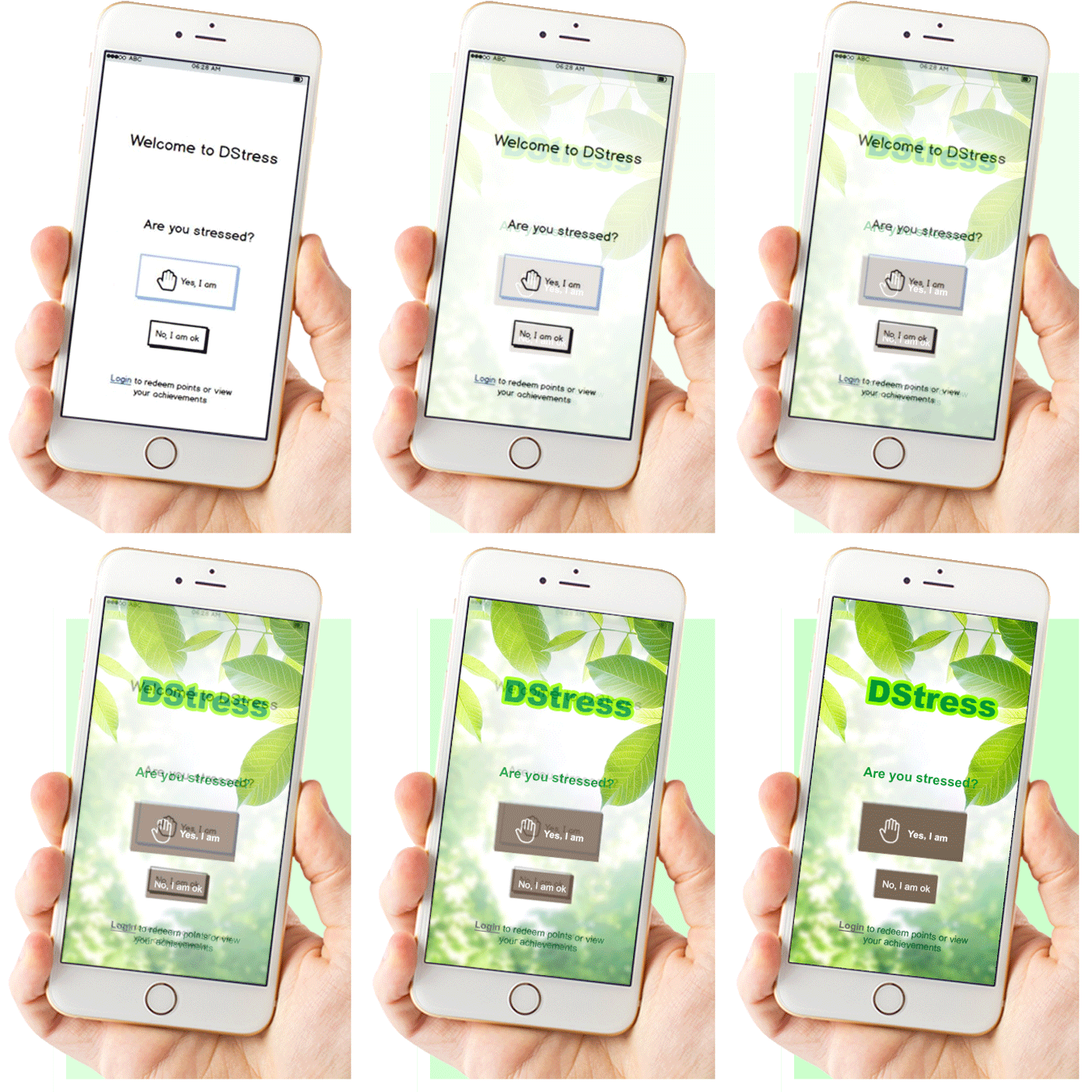
Click through prototype using marvelapp.com

dStress Case Study

Designing A Better User Experience

About dStress

The goal of this project was to conduct research on how various people deal with stress and the ways they cope. dStress provides meaningful and powerful moments that allow you to tune down the noise in your life.

Problem Statement

There are many various types of stress relieving applications available in the market. These Many users have a poor experience with these apps while other users have a perceived perceptions that they could be annoying. The challenges my team and I faced during our research were the constraints of an audience who does not want another tool that occupies their time.

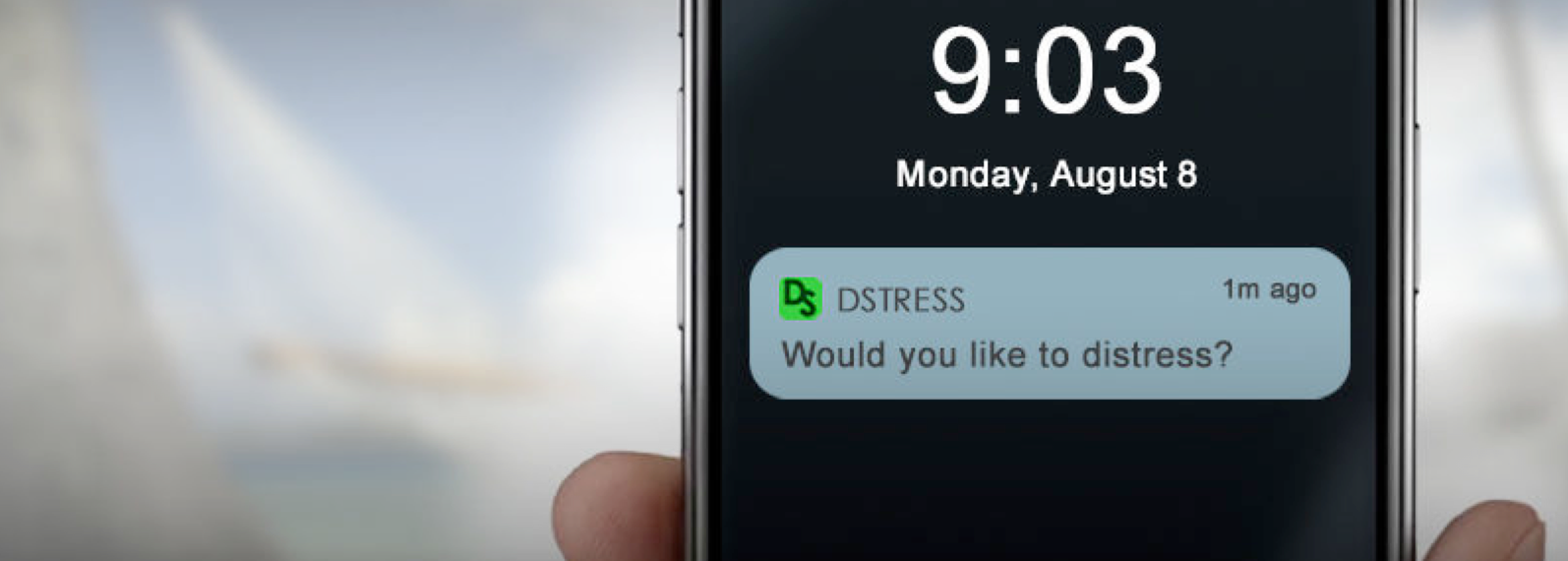
Because users are bombarded with many notifications on their mobile device, we sought to minimize the frequency of the tool while maximizing its’ value in the life of the user’s.

The Solution

The research conducted revealed that users wanted to feel a sense of control by managing or reducing notifications and personalization preferences. The app’s functionalities and features were designed to allow exactly that, flexibility and progress in the user’s life.

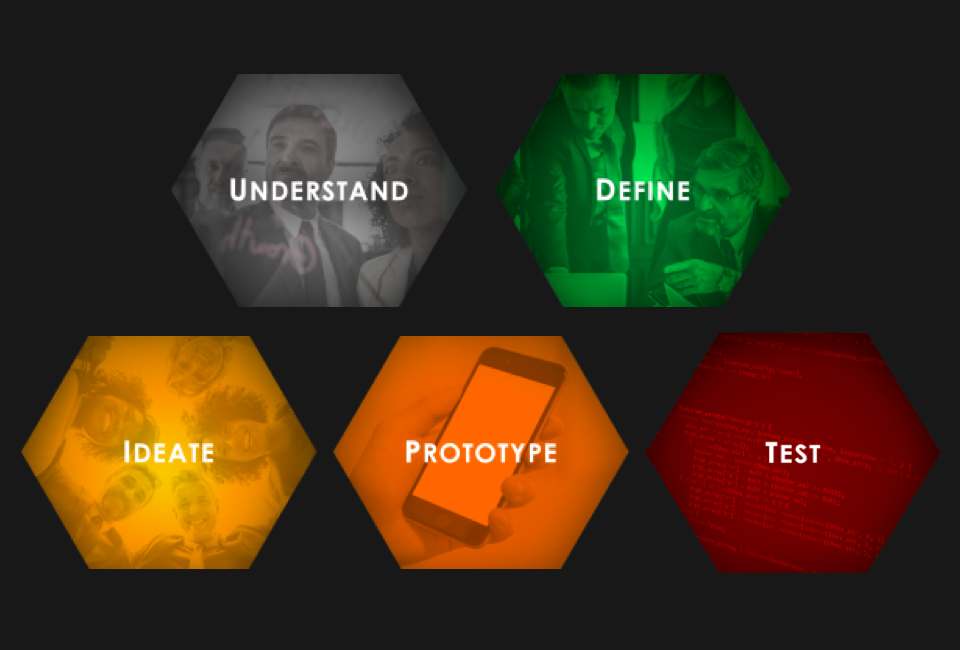
Design Thinking Process

Stanford University’s human-centered design process is an iterative approach. Discovery and Empathy is the foundation to understanding both the market and the existing issues, pain-points and behaviors of your targeted users.

Activities & Deliverables

Research + Discovery

  • Competitive analysis
  • Produce research plan
  • Screener questions
  • Conduct interviews
  • Analyze and synthesize data
  • Requirements gathering

Define + Ideate

  • Heuristic Evaluation
  • User Testing
  • Empathy Mapping
  • Develop Persona
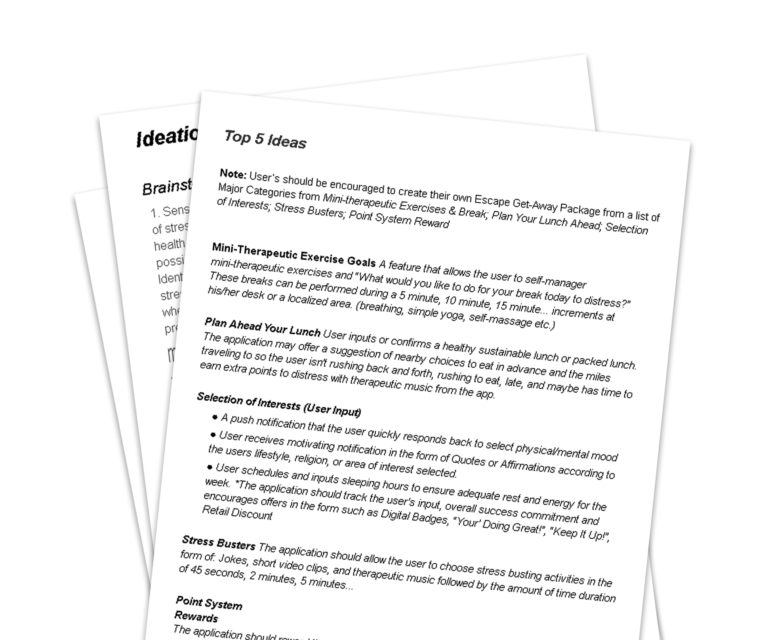
  • Ideation
  • User flows

Prototyping + Testing

  • Wireframes
  • Interactive prototype
  • Guerilla testing
  • Task analysis
  • User Testing

Background & Strategy (Growth & Scale)

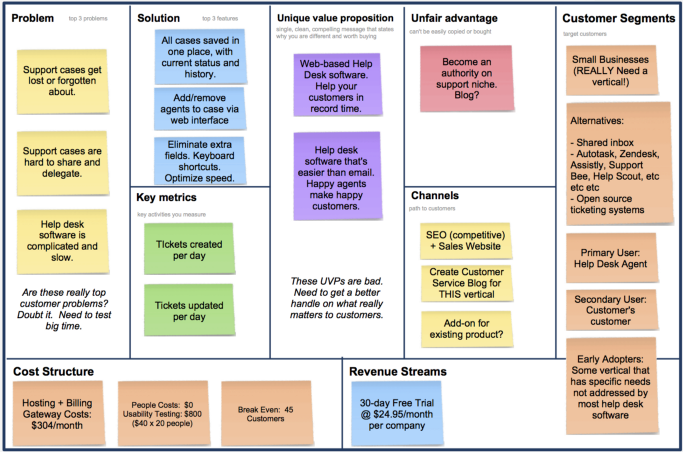
Customer Development And A Profitable Business Model

In today’s’ competitive world, it ‘s not enough to build a great product. You have to understand how the pieces fit together in the entire ecosystem (via platform). While examining an idea in the marketplace or during the development of a product or service, I keep a few key aspects in mind.

  1. Understand the competitive landscape, the value proposition, and how easily your business model can be copied by your competition, what can be improved, and the constraints or barriers around it.

  2. Validate your product/service idea with real customers and understand what needs are overlooked or are not being met enough.

  3. In what ways can technology be used to improve your business while enhancing your customer’s experience.

Business Strategy

The value proposition and differentiation describes how a company creates, delivers and captures value to achieve sustainability.

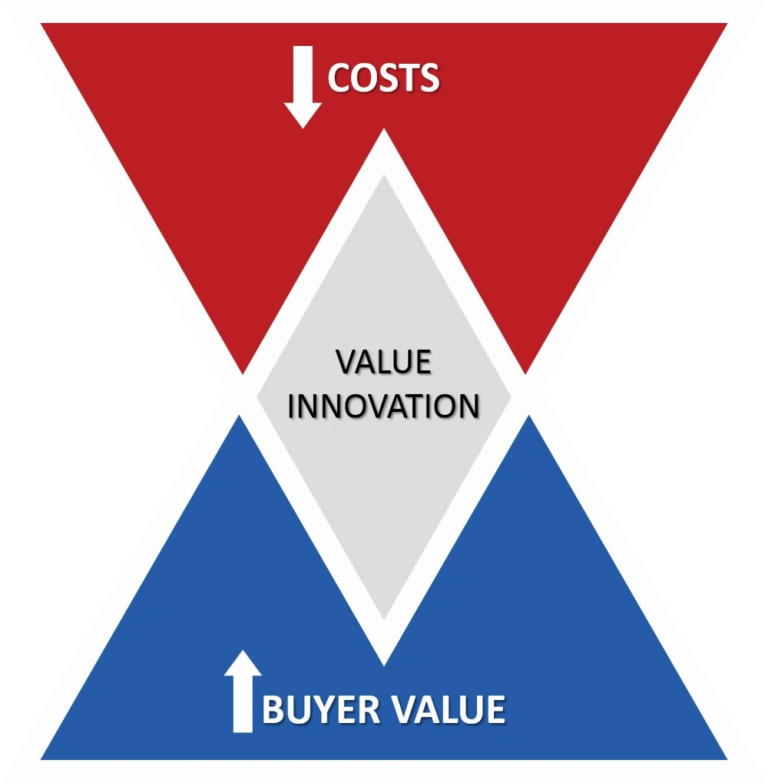
Value Innovation

By coupling the business model and UX, value innovation can influence adoption and continual usage in the market place.

Frictionless UX Design

Understanding systems or the job to be done provides macro/micro views that validate hypotheses, ROI, and encourage growth.

Discovery (Understand The Problem)

Learn about the problems from your market.

Deliverables

  • Screener Questionnair
  • Formulate Questions
  • Organize & Prepare Research Documents
  • Perform Qualitative Research Interviewing
  • Planning & Preparation

    Research findings was conducted throughout the world with participants between the ages of 24-45 and who are working. After collecting the data, we discovered various ways our targeted users   were coping with stress. Here are some of the methods that were used.

    Provisional or Proto-Persona

    I created a temporary placeholder of a user group in mind which needs to be fleshed out and validated so I know who I am creating a product for.

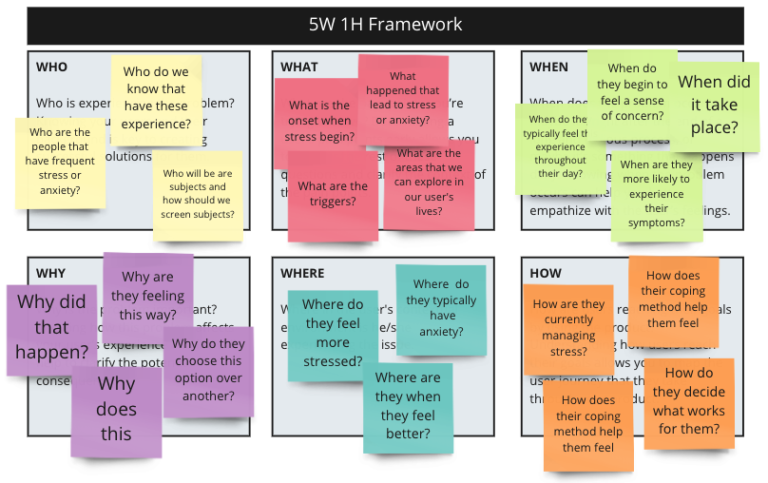
    5W1H Research Analysis Tool

    Several questions are raised early in the process to explore the cause-and-effect relationships underlying particular problems.

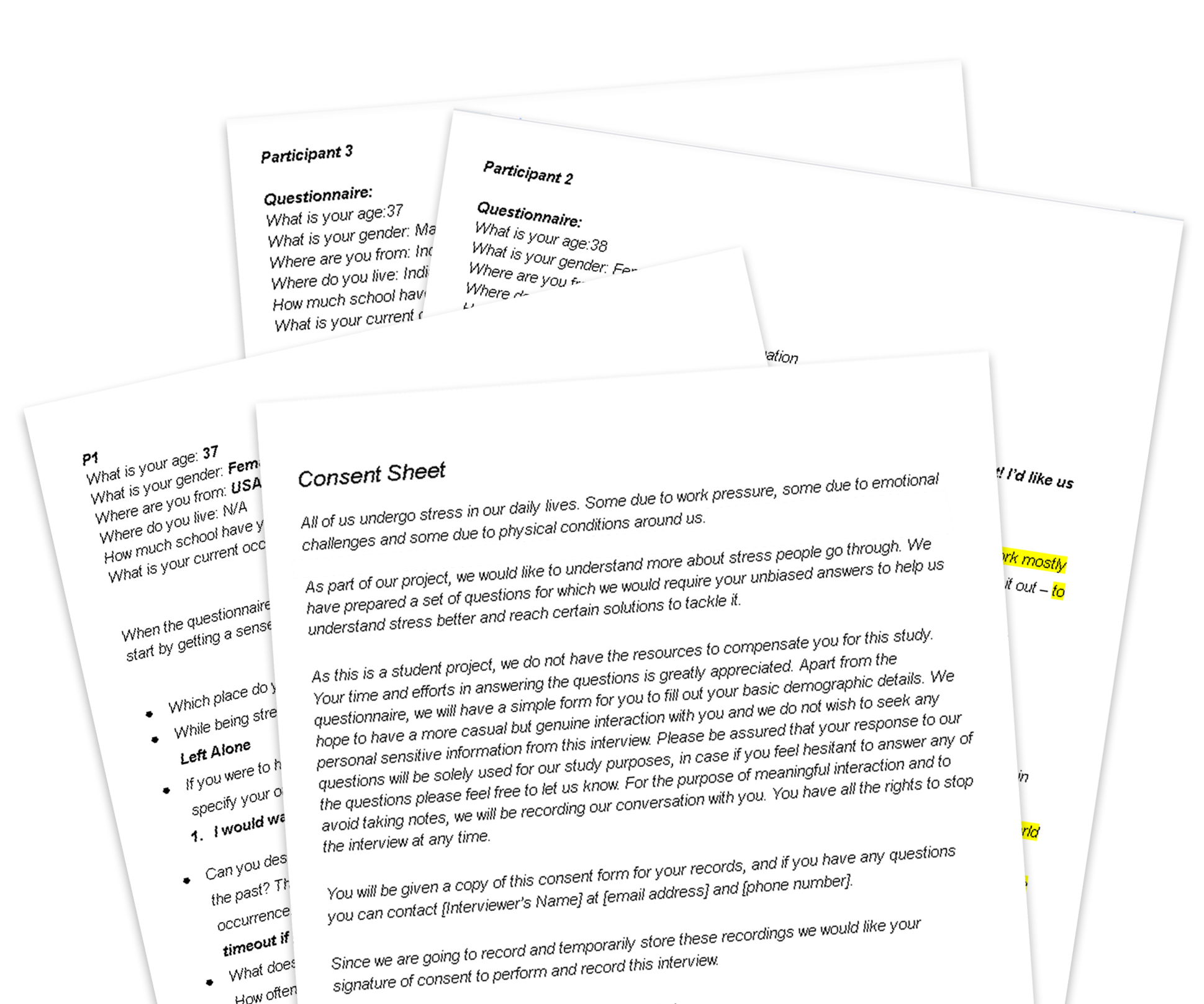
    Screener Questions

    To better understand your audience for who you are building a product for, I developed a screener questionnaire to understand the problem space.

    Qualitative Research Interviews

    The following research was conducted globally with the collaboration of 2 other participants. We targeted people between the ages of 24-45 and all who are employed. After collecting the data, I led the team and synthesized the qualitative data from our participants who shared how they responded and coped with stress. One participant shared his experience in this way, “I just need to shut the world off for a few minutes”. Here are a few more insights that were uncovered:

    – The need to step away for short breaks from the workload pressure.
    – Music is therapeutic
    – Grabbing a snack or early meal to refresh.
    – Sufficient sleep plays a role.
    – Worrying during stressful moment.
    – Lack of receiving or communicating support in the workplace.
    – Time management or organizing tasks according to priorities levels.

    When asked what do they believe they could do to help them, they mentioned: organize and along with these insights below.

    Voice of The Customer

    P2 “Plan my day effectively” 

    P5 “A more structured approach in terms of prioritizing work and time management”

    P7 “It’s more of an internal thing. I think not equating working with a sense of urgency to “ oh my gosh I gotta get this out!” Going into the anxious feeling. That normally comes when ever you know you need to get something out to a customer. So I guess just looking more realistic with diligence to get something out without inducing that anxious feeling.”

    Synthesize Findings

    Collect and analyze data to identify needs that inform design decisions

    Research Analysis And Design Requirements

    • Rather than feeling a sense of being managed from the tool the user must have a sense of self-managing themselves.
    • Create a list of items, goals, assessment to help their emotional and physical well-being
    • The system should allow the user to keep record of their overall success, activities, strengths or weaknesses, and their interests.
    • The tool should encourage the user to be committed to goals which will manage their stress.
    • The system should provide positive and rewarding feedback relative to their interest.
    • The app should be mindful of providing minimal features that can be performed during short breaks, work hours, or lunch.
    Gabriel Teniente Research Findings
    csds_usd
    docs

    Generate Solutions (Design)

    Diverge possible ideas that evolve the job to be done.

    Human-Centered Design

    Requirements For dStress

    Bring It To Fruition

    Develop ideas into tangible objects.

    Deliverables

    • Interactive Wireframes
    • User Flows
    • User Flow Diagrams
    • Task Flows

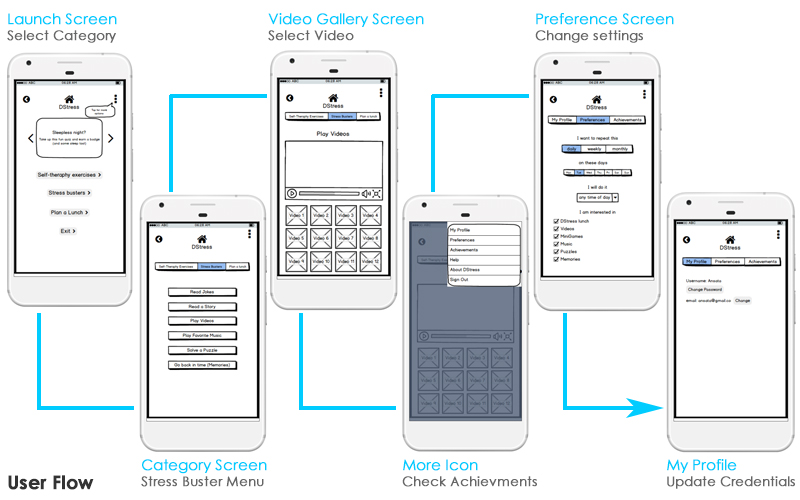
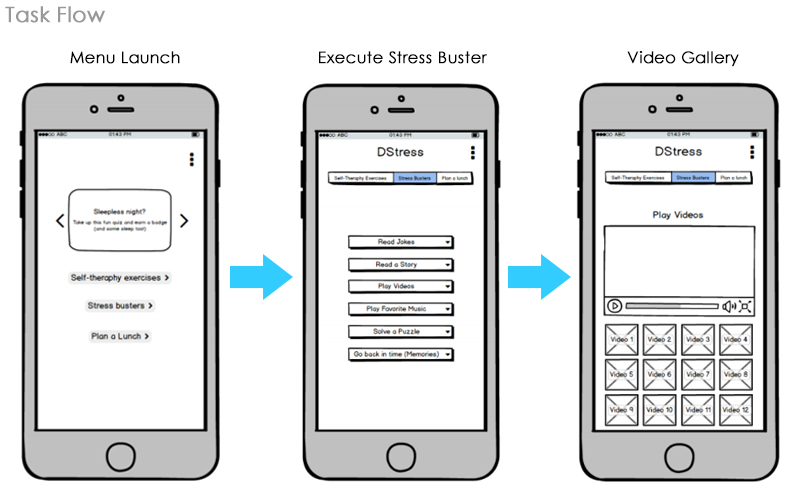
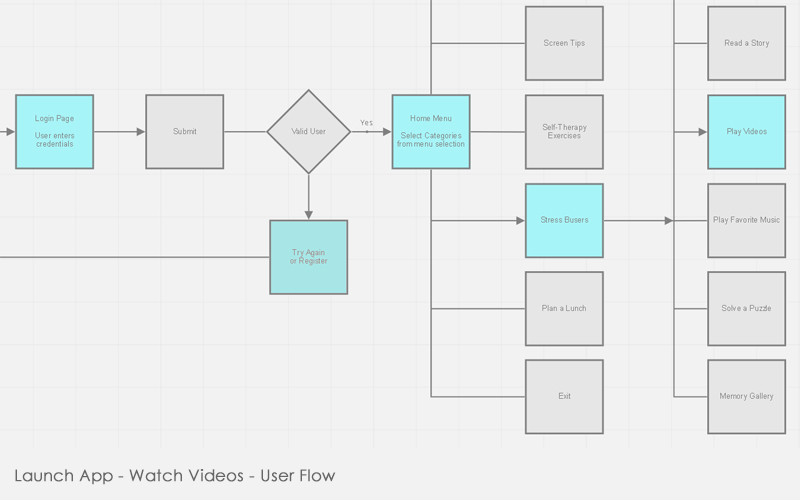
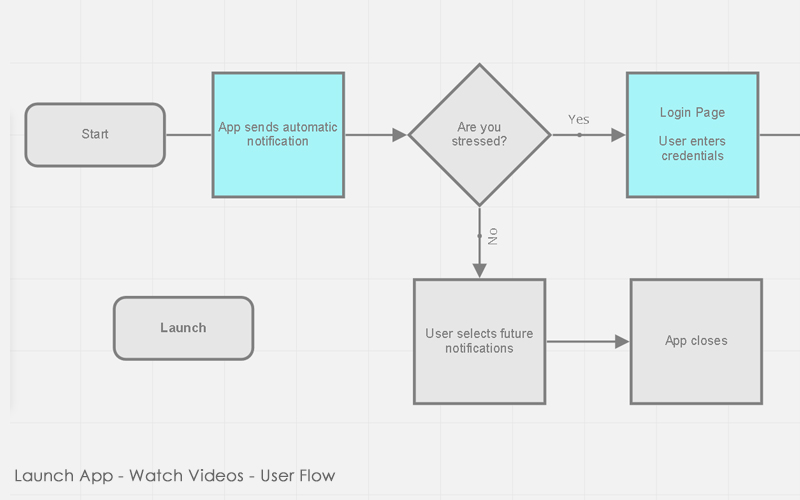
    The team and I went from from ideation, card sorting, and collaborating on our design requirements. A flowchart, task flow and user flows can be seen below.

    Gain Insight (Test Assumptions/Improve)

    Improve the design through user testing.

    Deliverables

    • Severity Ratings
    • Heuristic Evaluation
    • Usability Testing

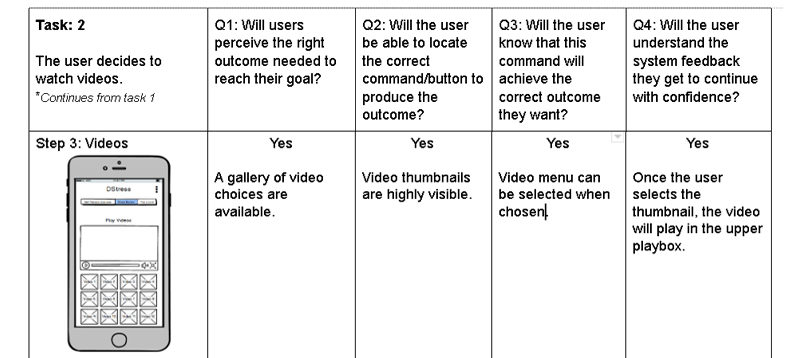
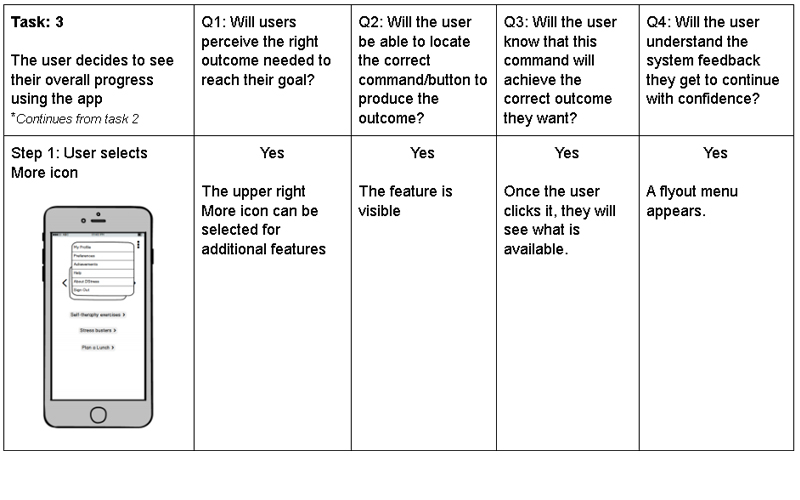
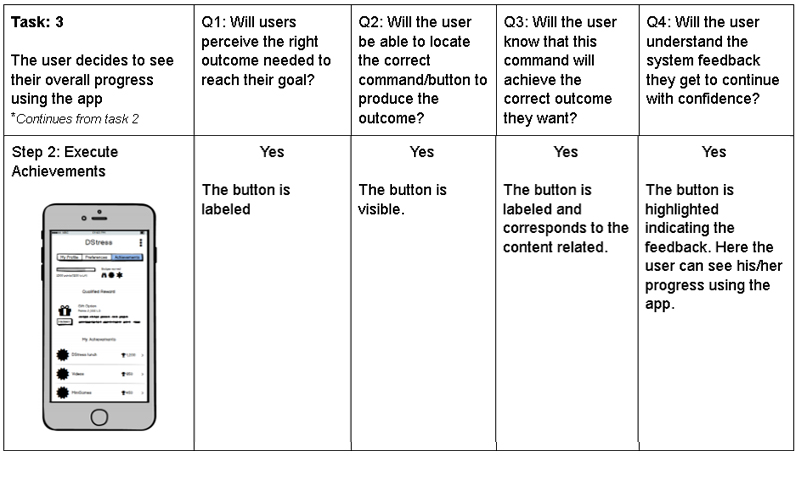
    I proceeded to test the user interface through formative testing using heuristics. Task analysis was performed to measure and identify usability problems to improve the user experience.

    Severity Ratings for Usability Problems

    Severity ratings can be used to allocate the most resources to fix the most serious problems and can also provide a rough estimate of the need for additional usability efforts. If the severity ratings indicate that several disastrous usability problems remain in an interface, it will probably be unadvisable to release it. But one might decide to go ahead with the release of a system with several usability problems if they are all judged as being cosmetic in nature.Jakob Nielsen on November 1, 1994

    Heuristic Evaluation and Severity Scale

    Usability Results And Improvements

    Ergonomics (or Human Factors)
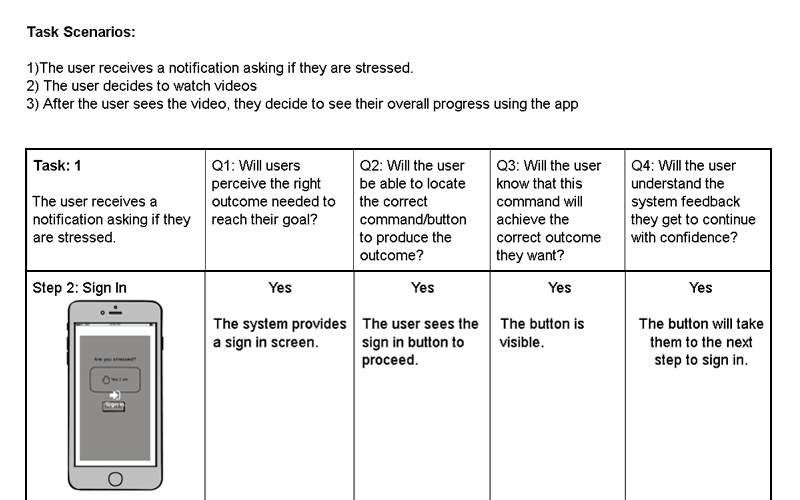
    Try The Wireframe Demo?
    Step 2
    Task 2 Step 1
    Task 2 Step 2

    The severity of a usability problem is a combination of three factors:

    • The frequency with which the problem occurs: Is it common or rare?
    • The impact of the problem if it occurs: Will it be easy or difficult for the users to overcome?
    • The persistence of the problem: Is it a one-time problem that users can overcome once they know about it or will users repeatedly be bothered by the problem?

    Reflection & Learnings

    Q&A Self-Reflection, Retrospective, and Journaling

    A: The designs were based upon observing user behaviors during a test plan that would analyze user click path and identifying problem areas. Repeated iterations were made until the product passed.

    A: Qualitative research was conducted after screening participants. Individual interviews were then held with a small sample through a series of open-ended questions.

    A: Two members collaborated with me on the test plan. We each conducted our interviews and then synthesized our feedback into a interactive prototype. As a former visual designer of 20 years experience, I helped refine and guide the wireframes. I would also take on the tasks of creating users flows and other diagrams.

    Scroll to Top